
Dentures Treatment in Changanassery
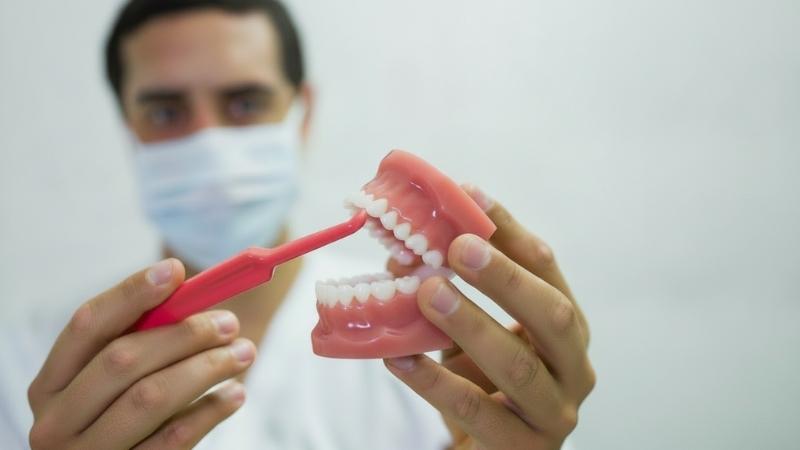
Comfortable & Natural-Looking Solutions
A patient sat in my chair recently and told me he had stopped eating jackfruit chips, roasted peanuts and even certain fish dishes because chewing had become unpredictable. Not painful every day. Just unreliable. Food would shift to one side of the mouth. Pieces would get trapped. Meals became slower. Family gatherings became awkward.
That is usually where the conversation about dentures begins.
People rarely seek Dentures Treatment in Changanassery because they are worried about appearance alone. Appearance matters, of course. Yet the daily frustrations tend to push people through the clinic door. Difficulty chewing. Slurred speech. A sunken facial appearance. Sore gums from trying to manage without teeth. The small compromises that gradually become normal.
Dentures are removable artificial teeth designed to replace missing natural teeth and surrounding tissues. They can replace a few missing teeth or an entire set. The technology has changed considerably over the past fifteen years. The image some people still carry in their minds—large bulky plates floating around in the mouth—is often decades out of date.
That said, dentures are not magic.
A good denture can restore function remarkably well. It cannot completely recreate the feeling of natural teeth rooted in bone.
Patients appreciate honesty about that from the beginning.
I sometimes see people who have spent years postponing treatment because they believe losing teeth is simply part of ageing. Age itself is not the deciding factor. I have seen people in their forties needing complete rehabilitation and people in their eighties functioning comfortably with only minor tooth replacement. The issue is whether missing teeth are affecting eating, speech, comfort or confidence.
Who needs dentures?
The obvious group consists of patients who have lost all their teeth. Less obvious are patients with several missing teeth scattered across the mouth. They may still have enough teeth to smile comfortably, yet chewing efficiency has fallen dramatically. Some develop headaches because they chew almost exclusively on one side. Others place excessive force on the remaining teeth, accelerating their loss.
Not every missing tooth requires a denture.
Not every patient is suitable for implants either.
Treatment decisions are rarely as straightforward as online discussions suggest.
When patients explore Missing Teeth Replacement in Changanassery, they often arrive convinced that implants are automatically superior. Sometimes they are. Sometimes they are not. Medical conditions, bone quality, cost considerations and personal preferences all influence the recommendation. Dentures remain an excellent solution for countless patients, particularly when designed carefully and fitted properly.
The difference between full and partial dentures seems obvious until patients actually need treatment.
Full dentures replace all teeth in either the upper jaw, lower jaw or both. Partial dentures replace only the missing teeth while preserving the natural teeth that remain. The supporting mechanisms differ. The design principles differ. The maintenance requirements differ.
A partial denture often derives stability from existing teeth. A full denture relies heavily on gum support, muscle coordination and accurate adaptation to oral tissues.
Lower full dentures deserve special mention.
Patients frequently hear stories about upper dentures working well and lower dentures causing frustration. There is some truth to this. The lower jaw moves constantly during speaking, swallowing and chewing. Tongue movements can destabilise poorly designed dentures. Bone loss tends to be more pronounced in the lower jaw over time.
A lower denture that fits beautifully on the day of delivery may become less stable years later as the supporting bone gradually changes.
Nobody talks enough about that.
One of the most common mistakes patients make is assuming that a denture should last forever. Oral tissues change continuously. Bone resorption continues after tooth loss. Weight changes affect facial tissues. Medical conditions influence oral health.
A denture that was excellent eight years ago may be completely inappropriate today.
This is why periodic review matters even when the denture seems usable.
Custom dentures deserve attention because the difference is often visible within seconds.
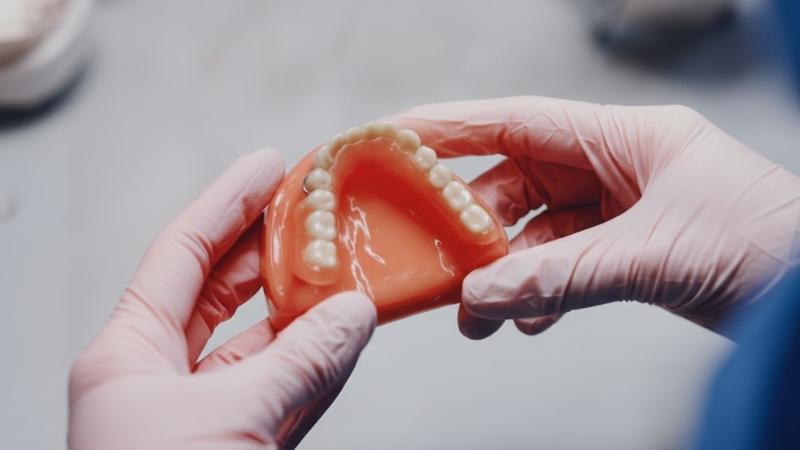
When patients ask about the advantages of custom dentures in Changanassery, I usually think about facial harmony rather than tooth replacement alone. The shape of the teeth, the position of the smile line, lip support and facial proportions all contribute to whether a denture looks natural.
An artificial smile is rarely caused by artificial teeth alone.
More often, it results from poor positioning.
The best dentures are frequently the least noticeable ones.
Family members may recognise that something has changed. They may struggle to identify exactly what.
That is usually a positive sign.
Speech adaptation creates anxiety for some patients. They fear that dentures will make them sound different. Certain words containing "s", "f", "v" and "th" sounds can feel unusual during the adjustment period. Most patients adapt within days or weeks. Reading aloud at home often accelerates the process.
Patients who remove their dentures repeatedly during this adaptation period tend to struggle longer.
Consistency helps.
Comfort is another topic surrounded by unrealistic expectations.
Are dentures comfortable to wear?
Eventually, often yes. Immediately, not always. Even a technically excellent denture introduces a new object into the mouth. Muscles must learn to work around it. Areas of pressure occasionally develop. Minor adjustments are common after delivery. Patients sometimes worry that needing adjustments means something went wrong. Not necessarily.
The first few weeks are part of the fitting process.
The challenge arises when patients tolerate sore spots for too long. Small pressure areas can become ulcers. What might have required a simple adjustment develops into a more painful problem. I encourage patients to report persistent discomfort early rather than waiting months.
Chewing adaptation deserves realistic discussion. Soft foods help initially. Not because dentures are weak but because the mouth requires retraining. Patients who immediately test their new dentures with hard nuts, sugarcane or tough meat are often disappointed.
Start gradually. Learn how the dentures behave. Chew on both sides simultaneously whenever possible. Small habits make substantial differences.
Some foods remain challenging even for experienced denture wearers. Sticky sweets. Certain varieties of dried fish. Tough meat fibres. Very hard snacks.
Most patients develop strategies naturally. The emotional side of tooth loss receives less attention than it deserves. People adapt surprisingly well to reduced chewing function. They adapt to altered appearance. They adapt to avoiding photographs. Then they receive properly fitted dentures and realise how much they had been compensating. The change is not always dramatic. Sometimes it is simply being able to smile without calculating angles. Or finishing a meal at the same pace as everyone else. Those improvements matter. Patients exploring Dentures Treatment in Changanassery often ask whether dentures are only for elderly individuals.
Not at all.
Trauma, severe gum disease, extensive decay and medical conditions can lead to tooth loss at various ages. Younger patients sometimes experience greater psychological difficulty accepting dentures because they associate them with ageing. Once treatment is completed, that concern usually fades quickly. Function tends to outweigh assumptions. The lifespan of dentures depends heavily on circumstances.
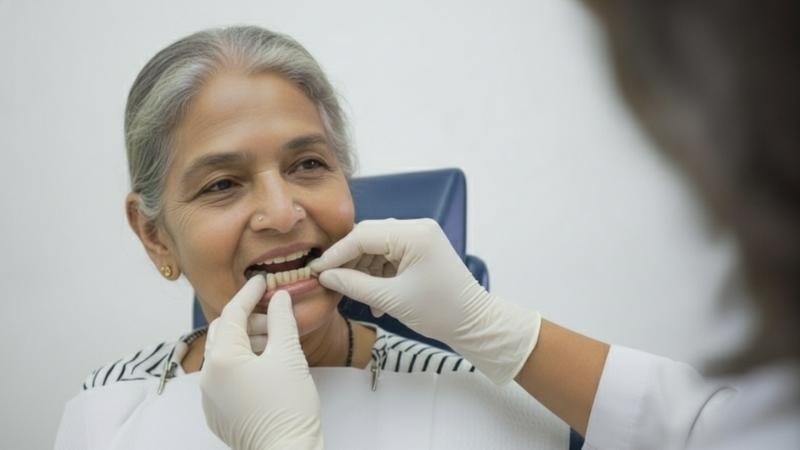
How long do dentures last?
The denture material itself may remain intact for many years. Five to ten years is commonly quoted, though some last longer. The more relevant question involves how well the denture continues to fit.
Those are not the same thing.
A denture can survive physically while becoming clinically unsuitable because the supporting tissues have changed.
Regular assessment remains valuable even when no obvious problems exist.
Failures occur.
That should be acknowledged.
A denture may fail because expectations were unrealistic. It may fail because severe bone loss limits stability. It may fail because underlying oral disease remains untreated. Some patients have exceptionally active tongue muscles that challenge lower denture retention. Others stop wearing their dentures during the adaptation phase and never develop confidence with them.
Occasionally the treatment itself is technically inadequate.
No dental treatment enjoys a 100 percent success rate.
Patients deserve transparency about that reality.
I sometimes disagree with the common advice that every loose denture should simply be replaced immediately. Relining can be effective in selected cases. Small modifications may restore comfort and stability. Replacing a denture unnecessarily can create additional adaptation challenges.
The correct decision depends on examination findings rather than assumptions.
Can dentures be repaired if they break?
Frequently, yes.
Fractured dentures can often be repaired. Broken teeth on dentures can often be replaced. The feasibility depends on the type of damage and the condition of the existing appliance. Repeated fractures usually indicate an underlying issue that requires investigation rather than endless repair.
Ignoring the cause rarely works.
The condition of the supporting tissues matters enormously.
A beautiful denture resting on unhealthy gums will never perform optimally.
This is why preparation before denture construction can be just as important as the denture itself. Gum treatment, removal of problematic teeth, management of infections and evaluation of oral tissues all influence the final result.
Patients occasionally focus entirely on the denture and overlook the foundation beneath it.
The foundation always wins.
In discussions about Full Dentures in Changanassery, I often find that patients are more worried about appearance than chewing. After treatment, priorities frequently reverse. They become pleasantly surprised by appearance and much more interested in eating comfortably.
That shift says a lot about daily life.
The practical realities of denture maintenance rarely appear in promotional material.
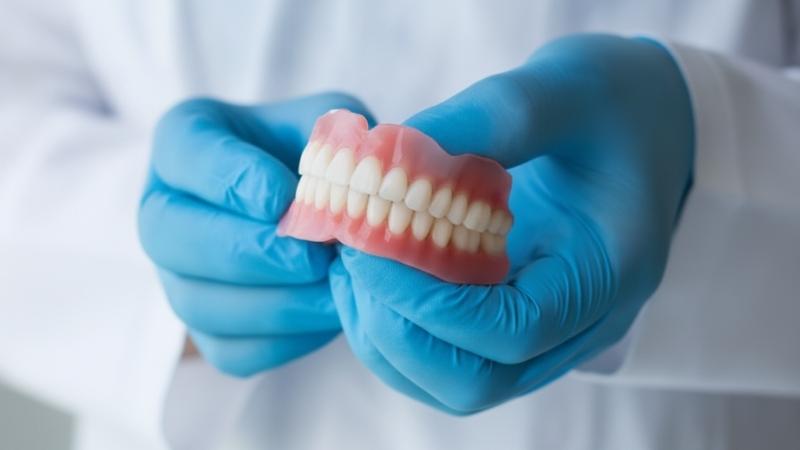
Dentures should be cleaned regularly but not aggressively. Abrasive cleaning methods can damage surfaces. Sleeping with dentures continuously is usually discouraged because oral tissues benefit from periods of rest. Storage methods matter. Drying out certain denture materials can affect their properties.
Simple routines prevent avoidable complications.
Selecting a Denture Clinic in Changanassery should involve more than comparing prices. Assessment quality matters. Follow-up care matters. The willingness to make adjustments matters. Communication matters.
A denture is not merely a product.
It is an ongoing clinical relationship between patient and dental team.
When treatment goes well, people stop thinking about their dentures.
That may sound like a small achievement.
In dentistry, it is often the highest compliment imaginable.
Frequently Asked Questions (FAQs)
I find it difficult to chew food because of missing teeth. Can denture treatment help?
In many cases, yes. Dentures can restore chewing efficiency and improve food choices. Success depends on factors such as the number of missing teeth, gum health, bone support and denture design. Extremely hard or sticky foods may still require caution.
What is the difference between full dentures and partial dentures?
Full dentures replace all teeth in an upper or lower jaw. Partial dentures replace selected missing teeth while natural teeth remain present and help support the appliance.
What are the advantages of custom dentures in Changanassery?
Custom dentures are designed around an individual's facial features, gum contours and bite relationship. They generally provide better comfort, appearance, stability and speech adaptation than generic solutions.
Why choose dentures for missing teeth replacement? What are dentures?
Dentures are removable artificial teeth used to replace missing teeth and surrounding tissues. They remain a practical option because they can restore appearance and function without requiring every patient to undergo surgical procedures.
Working Hours
9.30 am - 6.30 pm (Mon - Sun)


Contact
Serene Dental & Aligner Lounge, Novas Arcade, Opposite Hp Pump, Perumpanachy Junction, Thengana, Changanassery
075104 76683

© 2026 Serene Dental & Aligner Lounge. All rights reserved.